Will Cleaning a Pcb Make It Eork Again
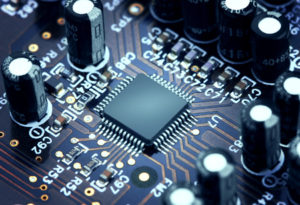
Printed circuit boards (PCBs) are the heart and brain of the electronic devices nosotros use every twenty-four hours—from consumer electronics and the vehicles we bulldoze, to medical devices and much more. They're composed of non-conductive material and are etched with conductive tracks and pads, with additional components connected through soldering. The components and connections among them on a PCB each serve a specific purpose, and without a make clean connexion, our electronic devices wouldn't piece of work the fashion we need them to, whether information technology's making a telephone call on a smart phone or the lifesaving mechanisms of a pacemaker.
Cleaning the PCB afterwards manufacturing and soldering is an important office of the electronic device assembly procedure, and can affect the overall durability, reliability, effectiveness and lifetime of a device. During assembly and the manufacturing procedure, PCBs can go soiled with flux or solder, clay from handling or from the environment, like residues, grit, moisture, colophony or resin, fingerprints or oxides. Some contaminates may even possess erosive backdrop, leading to the harm of circuits and connections down the road, causing shorts and failures, shortening the lifespan of the device. Cleaning abroad these types of debris will ensure in that location are no faults in functionality over time and prolong the life of the device.
When cleaning PCB assemblies the primary goal is to remove resin and flux residues from populated printed circuit boards. PCB assemblies employed in industries such as automotive, telecommunication, military, and aerospace, require assemblies that are free from whatever potential contaminants. Contaminant free PCBAs are mandatory for the side by side pace in the manufacturing process, i.e. underfill, epoxy staking or conformal coating. If left on the assembly, flux residue can cause poor wetting and delamination. Plus, the printed circuit boards expect better.
A clean and clear PCB can too be a benefit when it comes to the inspection process, or for whatsoever future troubleshooting. It is much easier to observe defects or spot any potential issues when the lath and all of its components are cleaned of any remaining contaminates or leftover solder.
Some types of flux are advertised as 'no clean' flux, suggesting that information technology doesn't require PCB cleaning afterwards flux is applied. However, it's still important to clean boards that are soldered with "no clean" flux in order to avoid electrical leakage and to ameliorate appearance. This type of solder material is designed to produce the least amount of residual, only does not eliminate the demand for cleaning altogether.
At that place are dissimilar methods generally used when information technology comes to PCB cleaning, each with their own benefits and potential drawbacks: manual cleaning method, ultrasonic cleaning method and gas phase cleaning method. The cleaning method you lot select can depend upon the effectiveness, complexity and density of components on your PCB, the equipment you have access to, cost and affordability, number of boards to make clean, ecology impact, and time.
Manual Cleaning Method
1 of the most common methods of printed circuit board cleaning is the transmission cleaning method. Simply as it sounds, any contaminates or leftover solder fabric are removed through manual, or concrete removal, with an alcohol solution and a minor castor. Occasionally, other tools tin be used in combination with a brush to physically remove whatever clay from the board.
The first step in this method is to soak the PCB in an acetone solution for roughly ten minutes in order to loosen any contaminates or dirt on the board. Post-obit the soak, a brush is used to gently remove unwanted particles, which is typically done while in an ethyl booze solution. Once the board is gently brushed of droppings, it is rinsed in demineralized water for a few minutes, and finally, is completely dried using a nitrogen gas gun.
The manual cleaning method is popular due to its simplicity and affordability, since it does not require any equipment and the supplies necessary are like shooting fish in a barrel to obtain. It is likewise considered to be a method with fairly depression toxicity, to both people and the environs. Notwithstanding, the lack of automation with this method tin can mean it is more time consuming, and may not be the all-time method for large batches of boards. The manual method can also exist limiting because you lot are only able to clean the parts of the board that tin be reached with a brush or other cleaning tool. Therefore, this may not be the best method when information technology comes to cleaning adequately complex or dumbo PCBs.
Ultrasonic Cleaning Method
The ultrasonic cleaning method employs a specialized machine, created specifically for cleaning PCBs. Similar the manual method, the board is get-go soaked in an ethyl booze solution to loosen dirt, contaminates or excess soldering materials and is and so placed into the bath of cleaning solution within the ultrasonic cleaner. The machine emits high-frequency audio waves into the liquid bath of cleaning solution, which creates billions of tiny bubbles that pop and physically remove any possible contaminates on the PCB, a procedure known equally cavitation.
The ultrasonic cleaning method is a strong choice to clean very dumbo or complex boards with many components considering its tiny bubbles can reach every bit of exposed surface. The powerful frequencies can reach even the smallest, most hard to achieve places, different the beard on a brush.
Some people cull to avoid the ultrasonic cleaning method because of the high frequencies' potential to damage components or connections on the board. However, it can exist the best option for a dense board where a physical brush cannot attain. Measuring the take a chance of a damaged component versus a soiled component is an important equation when it comes to using the ultrasonic cleaning method.
Gas Phase Cleaning
Gas phase cleaning, as well known as vapor stage cleaning or vapor degreasing, is a method that boils a chemical solvent in order to create steam, which and then dissolves dirt and contaminates left on the printed circuit board. This method is considered to non only exist effective, but to also be an environmentally-witting pick, depending on the chemical solvent used, and the power for the solvents to exist reused afterwards impurities are filtered. The fluid is often designed based on the particular contaminantes that must be removed, the temperature at which the chemical solvents eddy, whether or not they take combustible backdrop, and whether they are considered to be environmentally friendly. Like the ultrasonic method, the gas phase cleaning method is as well constructive for complex PCBs since the steam is able to attain small parts of a board where a physical brush may not exist able to reach.
Deionized Water Launder
Deionized h2o is a safe and effective solution for removing water-soluble flux remainder. ACDi utilizes water-soluble flux in both our leaded and lead-gratuitous pastes and solders, which means it can be cleaned with deionized h2o. The in-line wash uses deionized h2o jets at elevated temperature and pressure level to wash and rinse the PCB assemblies. The water temperature is 144 degrees F, and the pressure is 45 psi. The assemblies are so air dried with a serial of forced air jets. Resistivity and ionics testing are used to verify the cleanliness.
ACDi also employees leaded and lead costless no clean flux in our solders. In this case, the assemblies are cleaned using a manual soak in a water-based and eco-friendly alcohol cleaner. And and then washed in the deionized water launder. Given that deionized water is the purest course of water, quality-focused contract manufacturers use this as a standard for lath washing. The cleaning method you decide to utilize will depend on your particular PCB, its components, density and type of soldering materials used.
For more data nigh PCB cleaning, or for a gratis consultation regarding your electronic manufacturing needs, reach out to ACDi at 301-363-4182 and on our website, here.
Source: https://www.acdi.com/printed-circuit-board-cleaning-an-important-step-in-the-electronic-manufacturing-assembly-process/

Posting Komentar untuk "Will Cleaning a Pcb Make It Eork Again"